THE SHORT ANSWER
Your starting point
Choose one room function you need back, such as a clear route to the door or a usable table. Address immediate hazards first, then remove obvious waste and clean the chosen surface. Keep possessions that need decisions in one temporary container and give that container a follow-up task.
IN 30 SECONDS
What to remember
- Choose a usable result, not a picture-perfect room.
- Address hazards before cosmetic tidying.
- Cleaning and organizing are different jobs.
- A temporary sorting box needs a destination and a review time.
Pick the function you want the room to serve
“Clean my room” has no clear endpoint. “I can sit at the desk and open my laptop” does. Stand at the edge of the room and choose the one function you need today: walking through, sleeping, eating, or working.
This checklist is an editorial way to organize a cleaning session. It is not an ADHD treatment, and it does not require finishing the whole room. If the room contains hazards you cannot handle safely, get appropriate help rather than treating them as ordinary clutter.
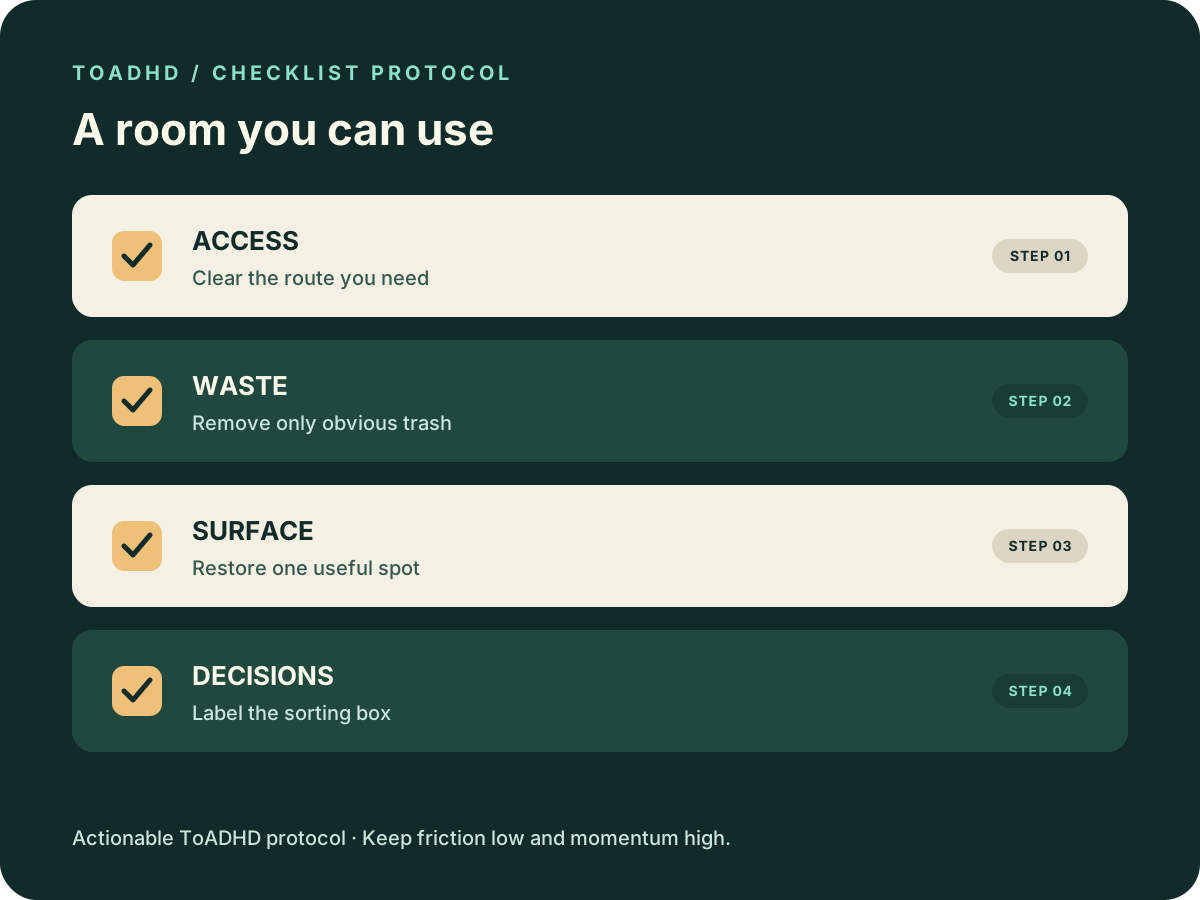
Use access, waste, surface, then decisions
The order below keeps a small reset from becoming a full decluttering project. Change it for the actual situation: a spill or blocked exit takes priority over a stack of papers.
- 1
Restore access. Clear a safe route to the place you need to use.
- 2
Remove obvious waste. Bag only items you can confidently identify as trash.
- 3
Restore one surface. Move items aside deliberately, then clean with a suitable product.
- 4
Park undecided objects. Put them in one labeled container and choose when to sort it.
Example: reclaim a desk without organizing every drawer
Suppose the desktop holds cups, packaging, cables, and unopened mail. Move the cups to the place where you will wash them. Put clear waste in the bin. Place the mail in a labeled “desk mail” tray rather than opening each envelope during the surface reset.
Set cables and equipment in a safe place, then clean the desk according to the surface and product instructions. Return only what you need for the next work session. The new follow-up task is “sort the desk mail tray,” not “finish cleaning everything.”
Keep the cleaning method simple and appropriate
CDC distinguishes cleaning from disinfecting and advises following cleaning-product instructions. Do not mix cleaning products. Its household guidance also explains when additional disinfection may be needed, such as when someone is sick or has a weakened immune system.
Use the guidance appropriate to your household rather than assuming every reset requires disinfecting every object. This article's access-and-surface checklist does not replace infection-control guidance, product labels, or specialist advice for mold or hazardous materials.
Sources: [1]
Prevent the temporary box from becoming a permanent pile
The box works only if it keeps this session bounded and creates a visible next job. Label it by origin and date, keep it accessible without blocking movement, and schedule a small sort. Avoid mixing new clutter into it every day.
During sorting, decide the home of one category at a time. If you cannot name a destination, that is an organizing decision to solve separately. Do not discard someone else's belongings just to complete the checklist.
Choose a smaller version when capacity is low
If a full desk is too much, restore enough space for one notebook. If reaching or carrying is difficult, work at a comfortable height and ask for help with the parts that exceed your capacity. A helper can take a defined job such as moving dishes while you handle papers.
Stop at the chosen usable result and put cleaning supplies away safely. If you continue, choose a new result deliberately. That keeps a ten-minute intention from silently turning into an all-room obligation.
COMMON QUESTIONS
A few honest answers
Should I clean or declutter first?
For a small reset, move enough items to clean the surface you need. Sorting your whole collection is a separate task. Immediate hazards and household-specific cleaning needs take priority.
What if the room gets messy again?
Use the same function as your next reset target and look for one recurring obstacle, such as no place for incoming mail. Adjust that destination rather than rebuilding the entire system.
SOURCES & REVIEW
Sources and further reading
- 1When and How to Clean and Disinfect Your Home ↗
Centers for Disease Control and Prevention
This guide offers general productivity education. It cannot diagnose ADHD or replace care from a qualified professional.