THE SHORT ANSWER
Your starting point
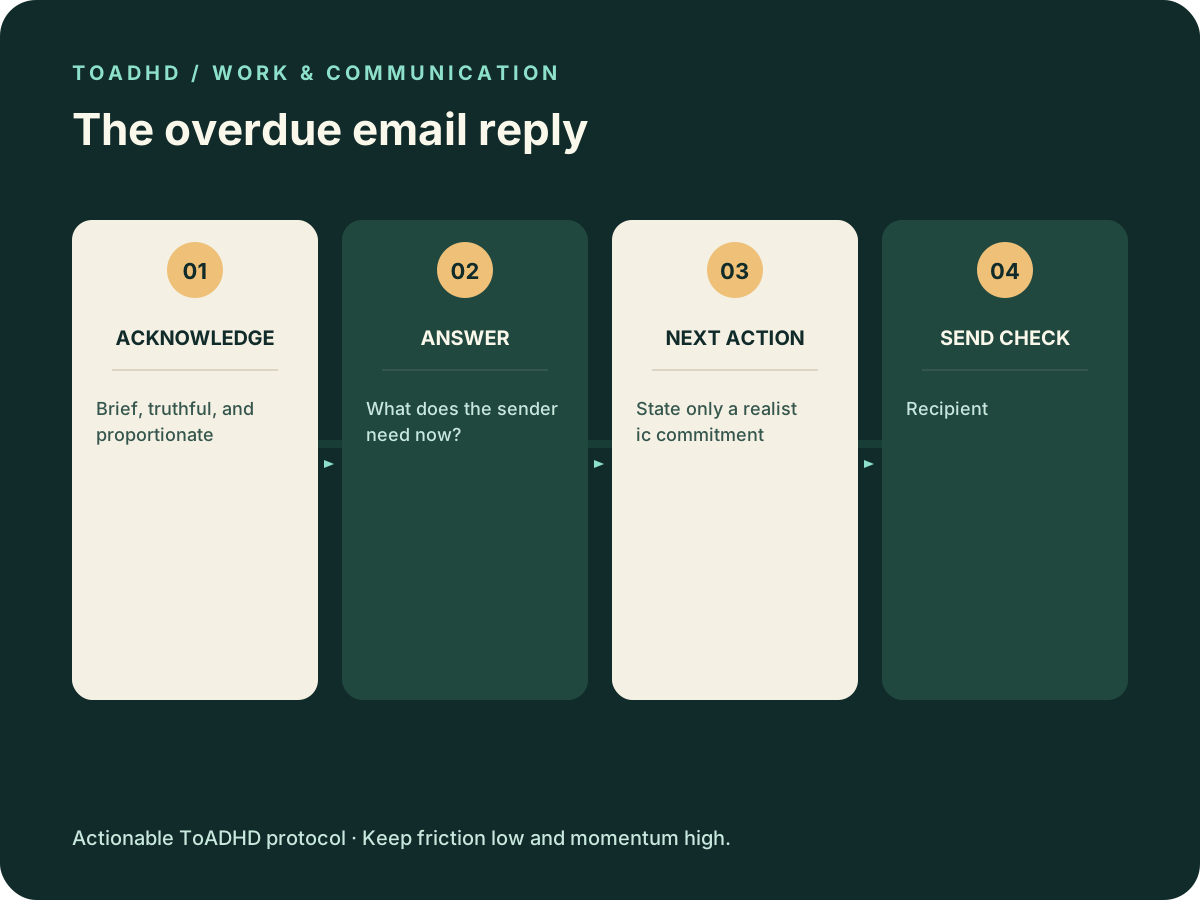
Read the latest message and identify what the sender needs now. Briefly acknowledge the delay if appropriate, answer the actual question, and give one honest next step. If you cannot finish the underlying work yet, send an accurate status update instead of promising an unrealistic delivery date.
IN 30 SECONDS
What to remember
- Respond to the current request, not every feeling about the delay.
- A short acknowledgment can be enough for a routine late reply.
- A missed commitment needs an accurate status and a repair action.
- Check recipients and attachments before sending.
Find the request underneath the backlog
An overdue message can feel like two tasks: answer the sender and explain why you did not answer sooner. Start by copying the sender's current question into a private note. If a newer message changed the request, use that version.
Purdue OWL recommends clear, concise email paragraphs and professional communication. The reply structures below are our practical examples, not a rule that every delayed email needs the same tone or a method proven to treat ADHD.
Sources: [1]
Build the reply from three pieces
Draft the useful answer before polishing the acknowledgment. This keeps the response centered on what the other person needs. For a routine delay, one sentence about timing usually gives you enough space to move to the substance.
- 1
Acknowledge the delay if relevant. Keep the explanation truthful and proportionate.
- 2
Answer the live question. State the decision, information, or current status directly.
- 3
Name the next step. Include a date only when you can reasonably commit to it.
Three examples you can adapt
These are invented examples. Replace the facts and dates before sending; do not copy a promise simply because it sounds polished.
Routine question — “Sorry for the slow reply. Tuesday at 2 works for me. Please send the meeting link when you have it.”
Missed deliverable — “I missed the date I gave you, and I’m sorry. The outline is complete, but the figures still need checking. I can send the outline today; I’ll confirm a realistic date for the checked version tomorrow.”
Request you cannot take on — “Thank you for following up. I’m not able to take on the review this month. I wanted to give you a clear answer so you can make other arrangements.”
If the work is not ready, separate the reply from delivery
“Reply to the email” and “finish the project” do not always need to happen together. You can describe the actual state of the work without presenting it as complete. Say what exists, what remains, and when you will provide the next update.
If even the completion date is uncertain, say so. A useful update might be: “I need to check the missing data before estimating the remaining work. I’ll send a status update by Thursday afternoon.” Choose that update time only after checking your capacity.
Do one send check
Read the message once from the recipient's perspective. Can they tell what you are answering and what happens next? Check the To and CC fields, the requested attachment, and the exact date. For sensitive or high-stakes workplace matters, follow your organization's communication process.
Avoid adding a new paragraph of explanation every time you reread. If the facts are accurate and the needed action is clear, further polishing may not improve a routine reply. You can acknowledge a delay without sharing private health information.
Close the loop after sending
If you promised an action, put that action and its date in the place you actually use for commitments. A sent reply is not the same as a delivered attachment. Keep the follow-up small enough to recognize: “Check the two missing figures for the report,” rather than “catch up.”
If the recipient is upset, respond to the impact and the practical repair. This article cannot guarantee how another person will react, but it can help you send a clear, truthful message instead of leaving the request unanswered.
COMMON QUESTIONS
A few honest answers
Do I need to explain that I have ADHD?
You do not need to disclose private health information to write a clear routine reply. Disclosure and accommodation requests are separate decisions that depend on your situation.
What if the email is months old?
Check whether the request is still relevant. If it is unclear, acknowledge the delay and ask whether the sender still needs the information. Do not assume the opportunity or deadline remains open.
SOURCES & REVIEW
Sources and further reading
- 1Email Etiquette ↗
Purdue OWL
This guide offers general productivity education. It cannot diagnose ADHD or replace care from a qualified professional.